Showing posts with label meat. Show all posts

Thursday, March 15, 2012

Italian Meatloaf

Throughout my cooking career, I've had limited success with meatballs, trying multiple recipes.  Some were tastier than others, and many fell apart while simmering in tomato sauce.  Forming and frying or baking meatballs is also time consuming.  Then I stumbled on the idea of Italian meatloaf--meatball flavor with the ease of a loaf!

The recipe that follows is my take on the Italian meatloaf from Desperation Entertaining and  a recipe for meatballs in Sunday gravy created by Cook's Illustrated.

Italian Meatloaf
2 slices hearty white sandwich bread, cut into 1/2 inch cubes
1/2 cup buttermilk
1/4 cup chopped fresh parsley (more or less)
2 cloves garlic, crushed
1 egg yolk
1/4 tsp crushed red pepper
1/2 tsp Italian herb mix, optional
1 # ground beef, 93% lean
1-2 ounces prosciutto, chopped fine
1/2 cup grated Parmesan cheese
1/3 cup onion, minced
pasta sauce, optional
  • Combine bread cubes, buttermilk, parsley, garlic, egg yolk, and spices.  Mash with a fork until no bread chunks remain.
  • Add ground beef, prosciutto, Parmesan, and onion.  Mix gently but thoroughly with your hands.
  • Pat mixture into a pan, cover with optional pasta sauce, and bake at 350 degrees until cooked through, about 30 minutes.
Notes:
  • Use a high quality sandwich bread, like Arnold Country White or Pepperidge Farm Farmhouse Hearty White.
  • The Italian herb mix is optional.  You can wing it by combining oregano, basil, marjoram, thyme, and/or cracked rosemary.
  • I usually prepare this recipe times six (6# meat).  I'll bake 1/3 and freeze the rest (raw) in two separate gallon freezer bags.  I freeze them flat on a baking sheet so they'll store neatly and thaw quickly.
  • If you try this x6, you'll have plenty of egg whites left.  Here's a source of ideas in case you want to use the whites instead of tossing them:  recipes.
  • Prosciutto is expensive and flavorful, so I usually use the smaller amount listed.
  • For best results, buy the tastiest Parmesan you can afford.  Real cheese is so much better than what comes in a can!
  • If you're making a big batch, the food processor can be a huge help.  Use it to grate the Parmesan, if needed.  The parsley should be chopped next, followed by (in any order now) the onion, garlic, and prosciutto.
  • At the bottom of this post I've typed in the ingredient amounts needed for a x6 batch.
  • If you use more than 1# of meat, your loaf will of course take more than 30 minutes to bake.  If you're in a hurry, shape it into a ring instead of a slab:
Buon Appetito!

Italian Meatloaf x6
12 slices hearty white sandwich bread, cut into 1/2 inch cubes
3 cups buttermilk
1 1/2 cups chopped fresh parsley (more or less)
12 cloves garlic, crushed
6 egg yolks
1 1/2 tsp crushed red pepper
1 Tbsp Italian herb mix, optional
 6# ground beef, 93% lean
6-12 ounces prosciutto, chopped fine
3 cups grated Parmesan cheese
2 cups onion, minced
pasta sauce, optional

Sunday, June 5, 2011

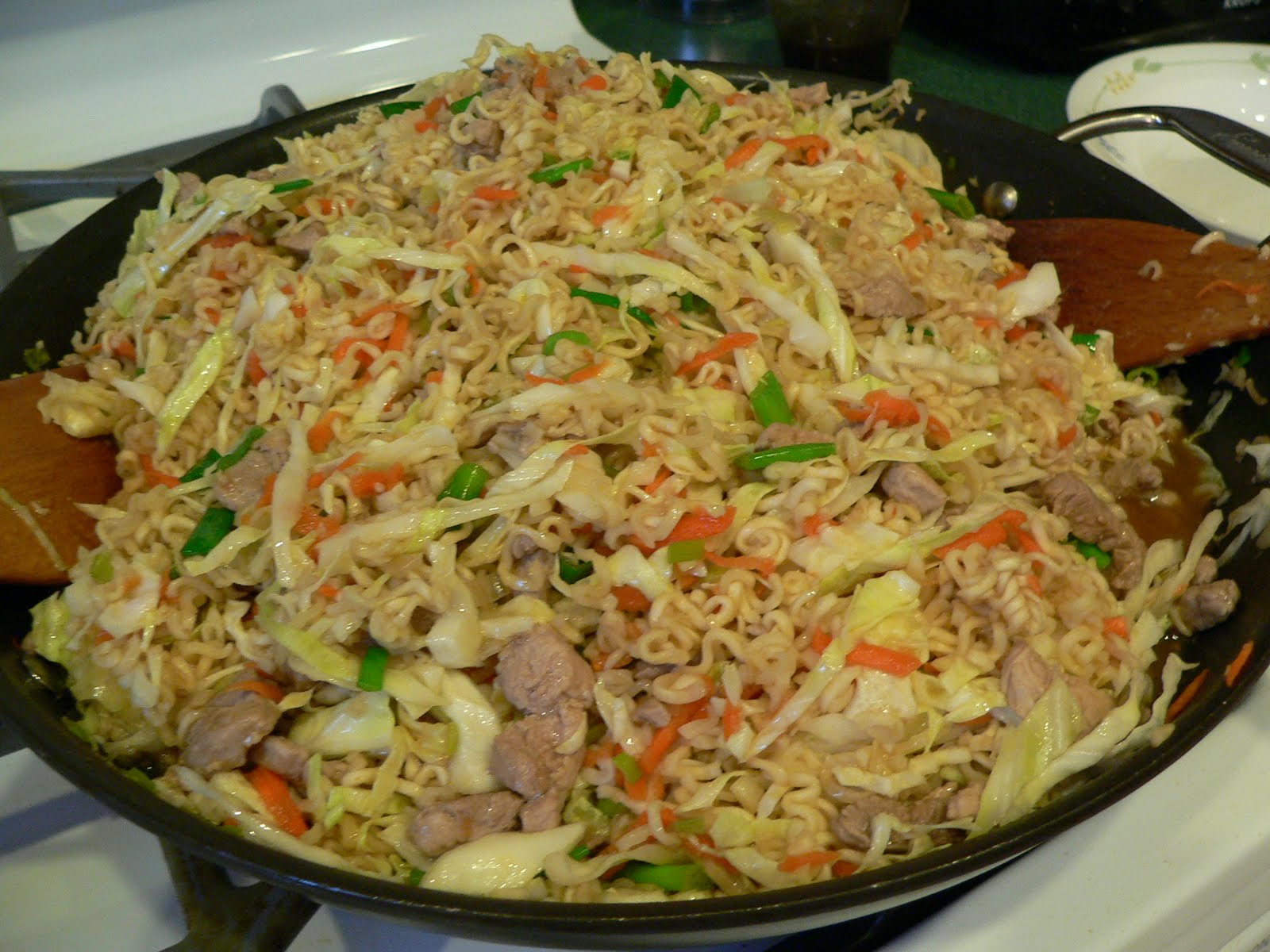
Pork Lo Mein

I prefer to borrow cookbooks from the library and test-drive them before buying my own copies.  The Best Skillet Recipes, from Cook's Illustrated, is a keeper.  Several recipes have become family favorites, including the cherry cobbler and pork lo mein.  Here's my slightly adapted version of the latter. 
Like all stir-fries, this entree is quick to toss together IF you've got your ingredients prepped and ready before you heat up your skillet.  Speaking of which, a word about equipment: 

CI points out that a wide skillet is better than a wok for American stoves.  More food comes into contact with the heat, making for better browning and quicker cooking.  Once I read that, my stir fry frustrations made so much sense!  No matter how I turned my flame, the food never cooked quickly enough in my old wok, often simmering in juices rather than frying.  Anyway, try a skillet!  For this recipe, use one with a 12" diameter.

I'll write the "serves 4" version of the recipe, although it should be enough for 6 people.  If my whole family is home (8), I'll prepare 1 1/2 batches (in a deep 13" skillet) and we end up with leftovers.

Pork Lo Mein, adapted from The Best Skillet Recipes
1# pork tenderloin, trimmed and sliced into thin strips
8 tsp low-sodium soy sauce, divided
2 Tbsp vegetable oil
12 medium scallions (~2 bunches), white and green parts separated, both parts sliced on the bias into 1" lengths
6 medium garlic cloves, minced or pressed (~2 Tbsp)
1 Tbsp minced or grated fresh ginger
1/8 tsp crushed red pepper flakes (or to taste)
3 1/2 cups low-sodium chicken broth
4 (3 oz) packages ramen noodles, seasoning packets discarded
2 Tbsp oyster-flavored sauce
2 tsp-2 Tbsp toasted sesame oil
1/2 # green cabbage (~1/4 medium head), cored and sliced thin
1-2 carrots, coarsely shredded (optional)

Set out your ingredients.  Pat the pork dry with paper towels and toss with 2 tsp of the soy sauce.
Scallion whites get their own bowl.  After typing the list above, I now realize I cut these too small!
Garlic, ginger (those are not slices--read about it in the notes), and red pepper flakes:
Oyster-flavored sauce, sesame oil, and the remaining 2 Tbsp soy sauce:
Cabbage, scallion greens (cut properly here), and optional carrot shreds:
(There's more cabbage in the above container than the recipe calls for because I double it to make the lo mein a one-dish meal.)

Heat 1/2 Tbsp of the oil in a 12" nonstick skillet over high heat until just smoking.  Add half the pork, break up any clumps, and cook without stirring until beginning to brown, about 1 minute.  Stir the pork and continue to cook until cooked through, 1 minute longer.  Transfer the pork to a bowl, cover to keep warm, and set aside.  Repeat with the remaining pork.
Add the remaining 1 Tbsp oil to the skillet and return to medium-high heat until shimmering.  Add the scallion whites and cook until lightly browned and softened, about 3 minutes.  Stir in the garlic, ginger, and red pepper flakes and cook until fragrant, about 30 seconds.
Stir in the broth.  Break the bricks of ramen into small chunks and add to the skillet.  Bring to a simmer and cook, tossing the noodles constantly with tongs or wooden paddles to separate, until the ramen is just tender but there is still liquid in the pan, about 2 minutes.
 (Cook a little more than this picture shows before moving on to the next step.)
Stir in the sauce ingredients and the remaining vegetables.  Cook until the cabbage is wilted and the sauce is thickened, about 1 minute.  Return the pork, along with any accumulated juices, to the skillet and cook until warmed through, about 30 seconds.
 Serve.  Enjoy!
Notes:
  • I double the cabbage to make this a one-dish meal.
  • The optional carrots add a bit more nutrition and a spark of color.
  • I typically buy a large package (4-6#) of pork tenderloin at the warehouse store.  I'll cut it all up, packing 1 or 1 1/2# allotments into freezer bags.  It's so handy to have the meat on hand and ready to go.
  • I keep processed ginger in my freezer, too.  It's a small time investment that saves me waste and time.
Here's the short-hand version:
Prep:
  1. pork with 2 tsp soy sauce
  2. scallion whites
  3. garlic, ginger, red pepper flakes
  4. scallion greens, cabbage, carrot
  5. oyster sauce, sesame oil, 2 Tbsp soy sauce
Cook pork in batches.  Set aside.
Fry scallion whites until softened.  Add garlic, etc. and stir until fragrant.
Add broth and ramen.  Cook until tender but some liquid remains.
Add sauce and vegetables.  Cook until cabbage is wilted and sauce is thickened.
Add pork, warm through, and serve.
Enjoy!

Thursday, March 17, 2011

Glazed Corned Beef

We always eat corned beef and cabbage on St. Patrick's Day.  My family enjoys it so much I could serve it more often; I usually manage just once or twice more a year.  My favorite treatment comes from Mable Hoffman's Crockery Cookery.  The meat is simmered in a crockpot, then brushed several times with a molasses-based glaze as it finishes in the oven.  Delicious!

Glazed Corned Beef, lightly adapted from Mable Hoffman's Crockery Cookery

1 (3 1/2 to 4#) corned beef brisket (flat cut is best)
2 Tbsp prepared mustard (I use Dijon)
1 1/2 tsp horseradish
2 Tbsp red wine vinegar
1/4 cup molasses
  • In a slow cooker, cover the corned beef with water.  Cook on low 10-12 hours or until tender.
  • Drain the corned beef.  Gently remove the external fat layers.  Place the meat in a baking dish covered with heavy duty aluminum foil.
  • Combine the remaining ingredients and brush on all sides of the meat.  Bake at 400, brushing with the sauce several times, about 20 minutes or until the beef begins to brown.  Cut across the grain.
Today I oh-so-gently simmered the corned beef on top of the stove for most of the day.  The 7# slab I bought was still partially frozen, so I didn't want to risk the slowness of the crockpot.  Besides, it's easier to cook the cabbage in the flavored broth already in a cooking pot instead of trying to transfer that liquid from the slow cooker.

Our traditional Irish dinner has always included cabbage, potatoes, carrots, and soda bread.  I've usually boiled all the vegetables, but admittedly they end up tasting pretty bland.  This year I briefly simmered only the cabbage in the corned beef broth, and it picked up a lot of flavor (more than usual--because the stock was made on the stove?).  The carrots were glazed with brown sugar and lemon juice, and I fried the potatoes with onions.  The traditional elements, ramped up just a bit.  Yum!

BTW, the soda bread is an adaptation (Of course; I rarely leave well enough alone!) of my mom's recipe.  I'll try to post that soon.

Monday, January 18, 2010

Oven Fried Catfish and Chicken Parmesan

Here's a simple, tasty way to prepare catfish.Oven Fried Catfish
2# catfish fillets
~ 1/3 cup butter, melted
1/2 cup fine dry bread crumbs
1/2 cup cornmeal
1 Tbsp Old Bay seafood seasoning
  • Rinse fish and pat dry.
  • Combine crumbs, cornmeal, and Old Bay.
  • Set up an assembly line. Dip fish in melted butter, drain, and coat with the crumb mixture. Place on baking sheet.
  • Bake until fish is opaque and flaky. The timing depends on oven temperature; anything from 350-425 will work well.
Notes:
  • You can dip the fish in melted butter, margarine, oil, or a combination. Since I use Better Butter, which is whipped, the volume isn't accurate. This means I don't measure anymore, but guesstimate how much to melt.
  • To keep things tidy, it works best to use one hand for dipping only--don't touch the crumbs with it at all.
  • Catfish is thick and moist, difficult to overcook.
  • This recipe isn't appropriate for thin fish filets as the coating-to-fish ratio would be to high.
  • I like to keep some prepared fish in the freezer. Lay it on plastic wrap on a baking sheet, cover, and freeze. Then place two filets back-to-back, wrap in plastic, and store in a freezer bag. Thaw in the fridge on a baking sheet and bake as usual. This can also be the foundation of a give away meal--a change from the usual lasagna or chicken casserole.
  • I cover the baking sheets with heavy duty foil. My dish washers are appreciative. ;-)
  • Leftovers reheat well in a nonstick skillet over medium-low heat.
VARIATION: CHICKEN PARMESAN
I use the same technique to make chicken Parmesan:
2# skinless, boneless chicken breasts
melted butter
1/2 cup Italian style bread crumbs
1/2 cup grated Parmesan cheese
-
The chicken can be cooked on a baking sheet (like the catfish) or in a pan with sauce (serve pasta on the side). Grease a baking pan (9 x 13" or larger, depending on how much chicken you use) and pour in a jar of pasta sauce. Mix in a little bit of water (1/2 cup?), top with chicken, and bake uncovered. Again, the timing depends on your oven temp. You already know how to cook chicken, right?
-
This freezes well, just like the fish. I find that 2# of chicken has less surface area (smaller but thicker pieces) than 2# of catfish, so you may not need quite as much crumb coating. Measure scant amounts or freeze the crumbs for next time.

Tuesday, June 2, 2009

Gyros

Gyros--YUM! Over the years, I've tried home cooked versions, and while the bread and condiments hit the right buttons, the meat was never even close.

Enter Cook's Illustrated. Two summers ago the magazine showcased gyros made with seasoned ground meat cooked in patties. These are fantastic! The recipe is a bit of a production (no surprise for CI fans), but worth it when the craving must be satisfied. Besides, I usually prepare a triple batch so there are two meals waiting in the freezer.

Here is the ground beef (instead of lamb) variation (adapted slightly) from the July/August 2007 issue:

Homemade Gyros
puffy pocketless pita bread, 1 1/2 cups torn pieces
1 medium onion, coarsely chopped, about 1 1/2 cups
2 Tbsp fresh lemon juice
1 tsp salt
1/2 tsp pepper
4 tsp dried oregano
6 cloves garlic, pressed
2 pounds ground beef, (I use 93/7 fat)
2-3 Tbsp oil (less if you use fattier beef)

For serving:
more pita
chopped cucumber
chopped sweet onion
chopped tomato
plain yogurt (preferably not non-fat)

Process pita pieces, onion, lemon juice, salt, pepper, oregano, and garlic in food processor until smooth paste forms, about 30 seconds.
Transfer onion mixture to large bowl; add beef and gently mix with hands until thoroughly combined. Form meat mixture into small patties.
This is when I bag up the extra meat mixture for the freezer.
Cook patties in a frying pan, on the griddle, under the broiler, or (my preference) on the grill.
Warm pitas individually in the microwave or by wrapping a stack in foil and heating in the oven. Serve with condiments: cucumber, onion, tomato, and yogurt. I also like an extra sprinkle of salt on the meat.

I was in a hurry this weekend and ended up cooking a bagful of meat all together in a skillet, taco meat style. The kids thought it was great!

The patties can be chewy if the meat is overmixed, plus they can be tricky to divide among the pitas. The ground mixture was easier to serve and eat, and was certainly easier to prepare. I don't know if I'll ever make patties again!

Tuesday, September 2, 2008

Kabab Masala/Ground Lamb Kebabs

This is adapted from Cooking the Indian Way, page 25.

1 1/2 pounds ground lamb or beef
3 cloves garlic, pressed
1 tsp grated fresh ginger
1 medium onion, finely chopped
3 Tbsp chopped fresh coriander leaves (cilantro)
1 Tbsp plain yogurt
1/2 tsp ground turmeric
1/2 tsp ground cumin
1 Tbsp lemon juice
1 tsp salt

Combine all ingredients. Let stand at least 30 minutes. Form into small patties and cook on the grill (or fry or broil).The original recipe suggested greasing skewers with melted butter, forming kebabs with wet hands, and broiling the meat.

Tuesday, March 18, 2008

Roasted Leg of Lamb

Okay, it doesn't look like much here, but this delicious lamb is part of our yearly Christianized Passover celebration. Although the recipe calls for a bone-in leg, I have the butcher remove it to make that long, festive meal just a little bit easier.

Roasted Leg of Lamb
1/4 cup Dijon mustard
2 Tbsp olive oil
2 Tbsp fresh lemon juice
1 Tbsp minced garlic
2 tsp dried oregano
2 tsp dried thyme
2 tsp dried rosemary
1 tsp salt
1 tsp freshly ground black pepper
5-6 pounds bone-in leg of lamb

  1. Trim lamb of the thin membrane (fell) and ALL fat.
  2. Blend remaining ingredients together in a small bowl.
  3. Evenly coat surface of lamb. Loosely cover and return to refrigerator to marinate for 2 hours or overnight.
  4. Place lamb on a rack in a roasting pan coated with cooking spray. Insert a meat thermometer, and place lamb in a preheated 450*F oven and immediately reduce oven temperature to 325*F.
  5. Roast until internal temperature reaches 160*F (for medium), about 20 minutes per pound. Transfer to a warm platter and loosely cover with foil. Allow to stand 15 minutes for easier carving.
  6. Slice into thin slices and spoon pan juices over slices. Garnish with rosemary leaves or fresh herbs.

Notes:
  • As I wrote, I usually have the butcher remove the bone for me. I try to get a leg that is 7-8# (with the bone).
  • During trimming of a deboned leg, sometimes the muscles separate. The roast pictured above is held together with three lengths of string. Actually, I keep unwaxed dental floss in the kitchen for this task. Separated meat means more areas to cover with marinade, anyway.
  • For this year's ~7.3# leg, I made a 1 1/2 batch of marinade. It was just the right amount, except I should not have increased the salt.
  • I marinate the meat on the rack in the pan OR wrapped in heavy plastic wrap (for longer).
  • I never end up with pan juices, so I line my roasting pan with heavy duty foil to ease cleanup.
  • If you're roasting this for Seder, try to time it so the lamb is done a little before dinner (rather than when you intend to start your ceremony).
  • This recipe is adapted from one in a Giant Food sales circular, ~2001.